Oct 6, 2026Blog
Private Label Fitness Bands Without a Screen: The Low-Risk Entry Point
The structural case for a screen-free first line, plus trial-order terms for a small first batch.
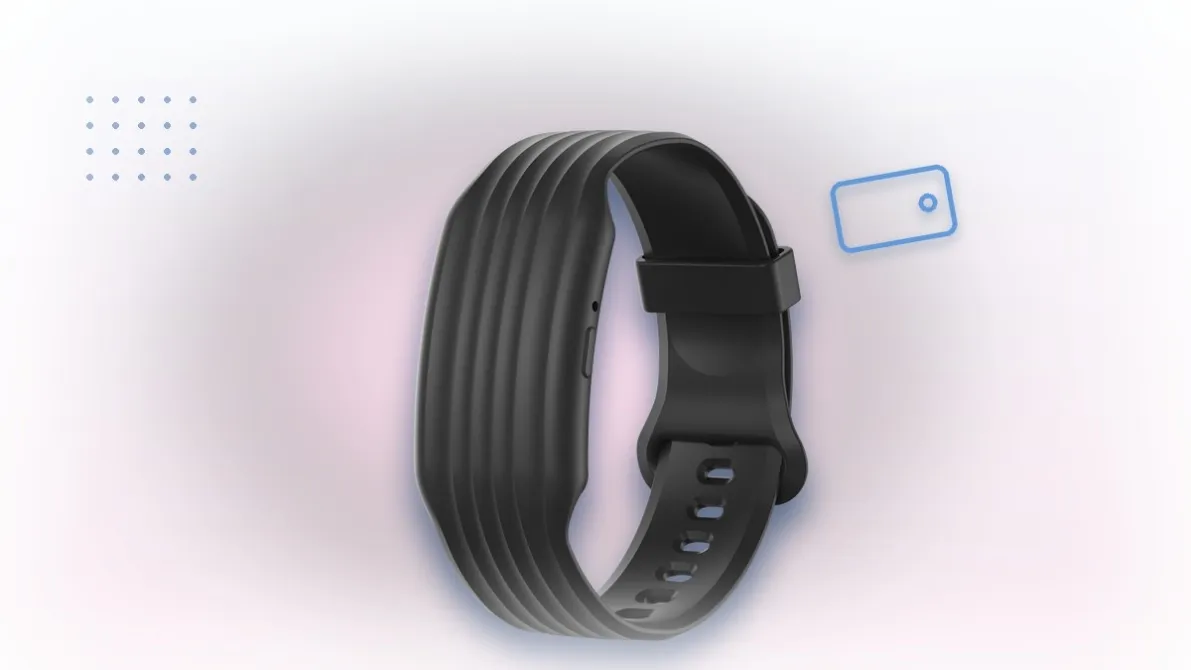
If you are a brand owner preparing your company's first wearable product line, choosing that first product is the widest decision on the desk. The direct answer: a screen-free fitness band is the lowest-threshold private-label entry this catalog offers. Leaving the display out removes an entire component — and the chain of parts and decisions that travels with it — from the build; it moves the selling story to the companion app and wearing comfort; and it lets a first batch be sized as a genuine trial rather than a lasting commitment. Start with the product that carries the least hardware, and spend the difference on your brand. A lighter first build reduces structure, not risk to zero, and no commercial outcome is promised on this page. If you are picking a fitness band for personal use, this page is not for you. This page is a demonstration draft prepared for site review and is an illustrative example, not real published content.
The first-line dilemma every new wearable brand faces
- You are a brand owner preparing the first wearable product line your company has ever launched.
- The plan is sensible on paper: start with one low-risk line, learn from it, and only then decide what deserves the larger commitment.
- The evidence gap opens the moment a screenless band is proposed, because a product with no display looks too simple to sell, and no amount of internal debate settles whether simple means weak.
- The rework takes the shape of escalation: sensors, screens, and case materials get stacked onto the first model in successive revisions, until the specification no longer resembles the plan the budget was written for.
- The consequence is a first line that consumes the entire budget before a single round of market feedback has come back, so the company launches once and learns nothing it can act on.
- The decision this page argues for is to start from a screenless band, keep the first batch small enough to be a real trial, and reserve the budget for app branding and the second order.
The costliest first line is the one that spends everything before the market says a word.
Why removing the display is a structural difference, not a downgrade
A display is not one feature among many; it is a whole component with a chain attached. The panel itself, the touch layer above it, the driver electronics behind it, the assembly and testing steps built around it, and the battery capacity its power draw demands — all of that enters the build the moment a screen enters the specification. Leave the display out, and the component leaves with its chain in one decision. That is why the difference between a screenless band and a watch-style product is structural rather than cosmetic, and why it is the single largest simplification a first-time program can hand itself.
Every screen also imports a run of specification decisions that have nothing to do with your brand: panel type and brightness, the on-device interface, interface languages, the interaction model on the wrist, and the testing load those choices create. A screenless build collapses that decision tree. The specification work that remains — measurement behavior, the companion app, the packaging — is work that differentiates your program rather than work that reproduces the category.
What takes the screen's place as the face of the product is the app. Readings, trends, and goals move from the wrist to the phone, and the selling story moves with them: how clearly the app presents the data, and how comfortably the band sits on the wrist through sleep, workouts, and workdays. Those two surfaces — app presentation and wearing comfort — are where a screenless band is judged, and they are surfaces a new brand can actually design, not surfaces that arrive fixed in the hardware.
One boundary belongs here. None of this argues against smartwatches; this same catalog carries twenty of them, and a screen is the right answer for any program whose selling story lives on the wrist. The claim is narrower: for a first line whose job is to teach a new brand what its market wants, the screenless form removes the largest single component from the build and the largest single set of decisions from the specification. Leaving out the display removes an entire component from the build, and that is a structural difference, not a styling choice.
Where the brand actually lives on a screen-free band
With no screen to carry an identity on the wrist, brand equity on a screenless band concentrates in two places: the companion app and the packaging. The app carries the name in its interface and its store listing; the box carries the unboxing, the inserts, and the first physical impression the customer receives. On a watch-style product those moments share attention with the display; on a band, they are the whole stage.
There is a trust dimension as well. A screenless band asks the customer to believe the measurements, and belief attaches to the name in the app and on the box. That makes the brand surfaces more than decoration: they are the product's credibility layer, and exactly where the budget a screen would have consumed can be put to work instead.
That concentration is also the practical opening for a new brand, because those two surfaces are where a ready-made platform accepts deep customization. On an existing platform, the customization scope covers brand identity, packaging, software, and firmware parameters — confirmed per model during the sampling and quotation stage, because what each platform accepts varies by model. The brand does not wait for a hardware program to mature; it is applied to the app and the box from the first batch, and it deepens as the program does. When a second product joins the catalog, the same brand surfaces scale with it while the hardware underneath is already engineered. On a screen-free band, the brand lives in the app and the box — and both surfaces are yours from the first batch.
A ready-made platform and a first batch you can size
FT-KR96Pro: the screenless platform already listed on this site
The ready-made platform the catalog on this site holds forty-one products across four form factors: twenty smartwatches, eighteen pairs of smart glasses, two smart rings, and one screenless health band. The band is the FT-KR96Pro, and its product page lists ECG, HRV, body temperature, screenless fitness tracking, and SOS. Read that list the way a program owner should: the measurement set is already engineered into the platform, the screenless form is the product's designed identity rather than an omission, and the app experience built on it is where a private-label program differentiates. A first line built on it also reads honestly: the selling points are the measurements the platform page already lists, plus the app story around them.
Because the platform exists, the program starts from configuration instead of invention: identity, packaging, software, and firmware parameters applied to hardware that is already built and listed. The company behind the catalog has worked in smart wearables since 2013, and the band sits in that range alongside watches, glasses, and rings — one tool among four form factors, chosen for the job, not ranked against the others. A ready-made platform turns a first product line into a configuration decision instead of an invention project.
Sizing the first batch
The commercial terms around a ready-made platform are structured for exactly this kind of staged start. The standard minimum order quantity is 3,000 pieces per model. For a first cooperation, that figure is negotiable and commonly lands between 300 and 500 pieces. Below that, a trial order of as few as 100 pieces can be accepted case by case, with the specific conditions agreed when the order is placed. None of these figures is a guarantee; each is a starting point for the quotation conversation.
Timelines follow the same staged logic. Sampling from an existing platform typically takes about one week, and mass production typically takes about four weeks, depending on configuration and quantity. Both cooperation modes are welcome: stock versus branded manufacturing on the platform, or direct purchase of ready stock, whichever the first batch calls for. Compliance work for the destination market — certification checklist among it — runs in parallel on its own checklist.
What the trial should be built to teach is worth writing down before ordering: how the listing converts, which words in reviews echo the app story, and where returns concentrate. Those answers decide the second order, where the standard quantity becomes the relevant number. A first batch sized to learn from is worth more than a first batch sized to impress.
Note your first-line plan on the worksheet
Note your first-line plan below before you shortlist a single model.
Work through five fields, one at a time:
- First-line role — the job the first line is hired to do: learning the market, covering a specific use case, or anchoring the brand's first presence in wearables
- Brand surfaces to customize — the app identity, packaging, software, and firmware parameters to confirm at the sampling and quotation stage
- Platform candidate — the ready-made platform under consideration, named against the measurement set its page lists; for a screenless entry, the FT-KR96Pro page lists ECG, HRV, body temperature, screenless fitness tracking, and SOS
- First-batch size and learning goal — the trial quantity under the negotiable terms above, what feedback the batch must return, and the decision it will inform
- Timeline checkpoint — the sampling and mass-production expectations to confirm, and the date by which the first feedback review happens
On how this page works: nothing here collects data, and no reply of any kind is promised. The working channel is your own email or WhatsApp, exercised under your own judgment, and this page is maintained by the iWearable content team. Whatever conclusions you reach stay local — in your notes, in your files, on your side of the table. Treat the five fields as the minimum a first line needs to be defensible; if a field cannot be filled yet, that is not an obstacle, it is the finding.
Copyable message template:
>
Hi iWearable, I am planning my first private-label wearable line. The form factor I am considering: [fill]. The brand surfaces I want to customize: [fill]. My first-batch size and learning goal: [fill]. Please send the ready-made platform list and discuss OEM configurations for a quotation.
Keep the completed template beside your launch plan, and let the first small batch teach you what the second one should be.