Oct 6, 2026Blog
OEM vs ODM for Smartwatches: Which Manufacturing Path Fits Your Brand
Compare buying stock, OEM on a ready platform, and from-scratch ODM on MOQ, lead time, and control before choosing a route.
If you are preparing to launch a smartwatch under your own brand, the first fork in the road is not a model — it is a manufacturing route. The direct answer: three routes exist — buying finished stock, OEM branding on a ready-made platform, and developing a watch from scratch as a true ODM project — and a first-time brand usually fits the ready-platform OEM route, which balances quantity, speed, and control at levels a new brand can sustain. Spot buying answers demand questions fastest; from-scratch ODM is feasible, and also heavy, slow, and evaluated case by case. Sort out the route on MOQ, lead time, and control first, and contact suppliers second. Every business figure here carries its negotiation attached. If you are picking a smartwatch for personal use, this page is not for you. This page is a demonstration draft prepared for site review and is an illustrative example, not real published content.
The quotation that never answers your question
- You are a brand owner preparing to put your own name on a smartwatch for the first time.
- The trigger is the point where the plan leaves the spreadsheet and a manufacturing route has to be chosen.
- The evidence gap is that suppliers use OEM and ODM loosely, sometimes interchangeably, so a quotation may not answer what you actually asked.
- The rework looks like quotations built on different definitions arriving side by side, none comparable on the same terms.
- The consequence is months and budget absorbed by a route that never matched the brand's quantity, timeline, or control needs.
- The decision is to place your plan against MOQ, lead time, and control first, and only then open conversations with suppliers.
Mixing OEM and ODM into one interchangeable phrase is how a sourcing plan goes wrong before it starts.
Three routes on one map
Strip away the vocabulary and three routes remain, each a different bargain between money, speed, and say-so, answering three questions: how many units you can commit to, how fast the brand must reach the market, and how much of the product you control. Which models deserve a place in the line is a separate selection question this site covers elsewhere; this page stays one level above it. A route decision is three decisions at once, and naming them separately is what makes quotations comparable again.
Route one: buy finished stock
Choose an existing model, buy the units as built, and sell them under the arrangement offered. Nothing is designed and little is changed, so the brand presence on the product is thin. Speed and the lightest entry barrier of the three are the advantages; the trade is hardware identical to what any other buyer can purchase, so differentiation must come from channels, content, or service. On this platform, direct stock purchase is an explicitly welcome mode of cooperation.
Route two: OEM on a ready platform
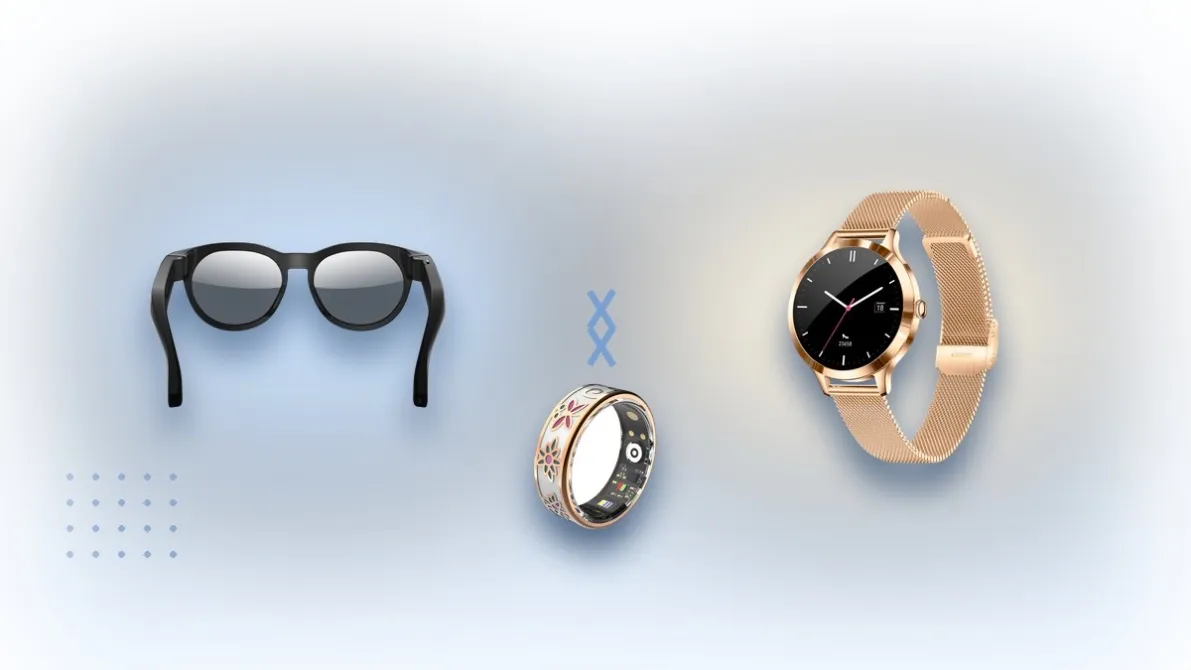
Here the supplier maintains a catalog of finished platform designs, and the brand goes on top: your brand identity, your packaging, and — per model, confirmed at sampling and quotation — software and firmware parameters. The hardware engineering is already done; the brand layer is what changes. This is the route most first-time brands actually need, and the layering inside a ready platform is what makes it stretch. The ready catalog listed on this site holds 41 models across four categories: 20 smartwatches, one screen-free fitness band, 18 smart glasses, and two smart rings. The layering matters more than the count: the SW-X2 page lists GPS positioning, a 3ATM marking, an IP69K marking, dual-band L1+L5 positioning, and an AMOLED display, while the SW-X5 page lists GPS positioning, a 5ATM marking, dual-band L1+L5 positioning, an AMOLED display, and Bluetooth calling. Two models, two configurations — a brand can climb within one catalog as its line matures.
Route three: from-scratch ODM
A true ODM project starts from a blank page: a new industrial design, new electronics, new tooling — a product that does not exist until the project builds it. Stated plainly: this route is feasible, and also the most demanding of the three, with heavier investment, a longer cycle, and an evaluation that happens case by case. It suits brands with proven demand, engineering involvement of their own, and a timeline that can absorb a development program. It is not the starting point this page recommends, and nothing here dismisses it — for an established brand defending a differentiated line, it can be the right commitment. The honest error is entering it by accident — a quotation labeled ODM, and nobody asking what the label meant.
The table below lines the three routes up on the same axes, so the comparison stops depending on whose definition arrived with the quotation.
Axis | Buying finished stock | OEM on a ready platform | From-scratch ODM |
|---|---|---|---|
What you get | Existing units, as built | A proven catalog design carrying your brand | A new product developed to your brief |
Typical MOQ | Lightest of the three; set by available stock | Standard 3,000 pieces per model; first orders negotiable, commonly 300–500 pieces; 100-piece trials case by case | Heaviest of the three; agreed case by case |
Typical lead time | Shortest; finished goods ready to ship | Sampling typically about 1 week; mass production typically about 4 weeks, depending on configuration and quantity | Longest; development runs months and is confirmed case by case |
Control | Choice of model only | Brand identity, packaging, software and firmware parameters, per model | Deepest: industrial design, electronics, materials |
Entry barrier | Lightest | Moderate | Heaviest: engineering and tooling investment from day one |
Read the matrix as a whole: a route is the wrong route when any one axis fails, however well the other rows look.
Compare on the axes that decide
Quantity is where a mismatched route hurts first; suppliers ask about it before anything else. On a ready platform, the standard MOQ is 3,000 pieces per model; for a first collaboration the figure is negotiable, commonly landing between 300 and 500 pieces; a 100-piece trial order can be discussed case by case, with specifics confirmed when the order is placed. That known shape makes the OEM column plannable. The discipline: ask every supplier what quantity its quotation assumes, and set aside any that cannot answer. On a ready platform, MOQ behaves like a negotiation with a known range, not a wall.
Time is the axis that quietly disqualifies routes. On platform work, sampling typically takes about one week and mass production typically about four weeks, depending on configuration and quantity — a calendar measured in weeks. Finished stock is bounded by stock on hand and shipping speed. A from-scratch ODM program puts development in front of production, and development is measured in months and confirmed case by case. Build the calendar backwards from the launch date: a route that cannot land inside the window the brand can wait is the wrong route, however well it scores elsewhere.
Control decides how much of the product is yours beyond the units. Finished stock offers none past the choice of model. Platform OEM concentrates control where a young brand needs it — the name on the product, the box it arrives in, and the software and firmware parameters that shape the user experience, defined per model and confirmed at sampling and quotation. From-scratch ODM extends control to the design itself, with the responsibility and timeline that owning a design carries. One step deserves mention: a brand unsure whether watches are its category can enter one level lighter through the same platform logic. The FT-KR96Pro page lists ECG, HRV, body temperature, screen-free fitness tracking, and SOS — a screen-free fitness band rather than a watch, on the same platform, with a smaller footprint than a watch line.
Where each route fits
The default this page recommends is specific: a brand launching its first smartwatch should start from OEM on a ready platform. The route lines up on all three axes at once — a first-order MOQ negotiable from the 3,000-piece standard, with a 100-piece trial discussable case by case; a calendar measured in weeks; and control concentrated on the brand layer a young brand can actually use. A first brand rarely needs to invent hardware; it needs its name on hardware that already works.
Spot buying fits a different moment: demand that has not been tested yet. A modest quantity of finished units answers a market question faster than any plan — test with stock, then brand with OEM once the signal exists.
From-scratch ODM fits when it fits: proven demand, engineering resources on your side, and a willingness to be evaluated case by case. What never fits is choosing by vocabulary — taking the route whose acronym sounded authoritative instead of the route whose axes line up with the brand's own numbers.
Choose your route on the worksheet
Commit to a route on paper before you commit to a supplier conversation.
Work through five fields, one at a time:
- Route under consideration — buying finished stock, OEM on a ready platform, or from-scratch ODM, named explicitly
- First-order quantity you can place — the real number any MOQ conversation should start from
- Timeline target — the launch date the route must land inside, checked against sampling and production lead times
- Control requirements — brand identity, packaging, and software or firmware parameters, listed per model
- Confirmations to request — which of those configurations are feasible on which models, to be confirmed at sampling and quotation
On how this page works: nothing here collects data, and no reply of any kind is promised. The working channel is your own email or WhatsApp, exercised under your own judgment, and this page is maintained by the iWearable content team. Whatever conclusions you reach stay local — in your notes, in your files, on your side of the table. Treat the five fields as the minimum a route decision needs to survive its first supplier conversation; if a field cannot be filled yet, that is not an obstacle, it is the finding.
Copyable message template:
>
Hi iWearable, I am choosing a manufacturing route for my own smartwatch brand. The route I am considering: [fill]. The first-order quantity I can commit to: [fill]. My launch timeline: [fill]. The configurations I would like confirmed per model: [fill].
Keep the completed worksheet beside the launch plan, and let the three axes — not a supplier's vocabulary — tell you which route is yours.