Oct 6, 2026Blog
How to Private Label a Smartwatch: A Brand Owner's Playbook
Six steps from platform selection to launch, with typical sampling and production lead times at each stage.
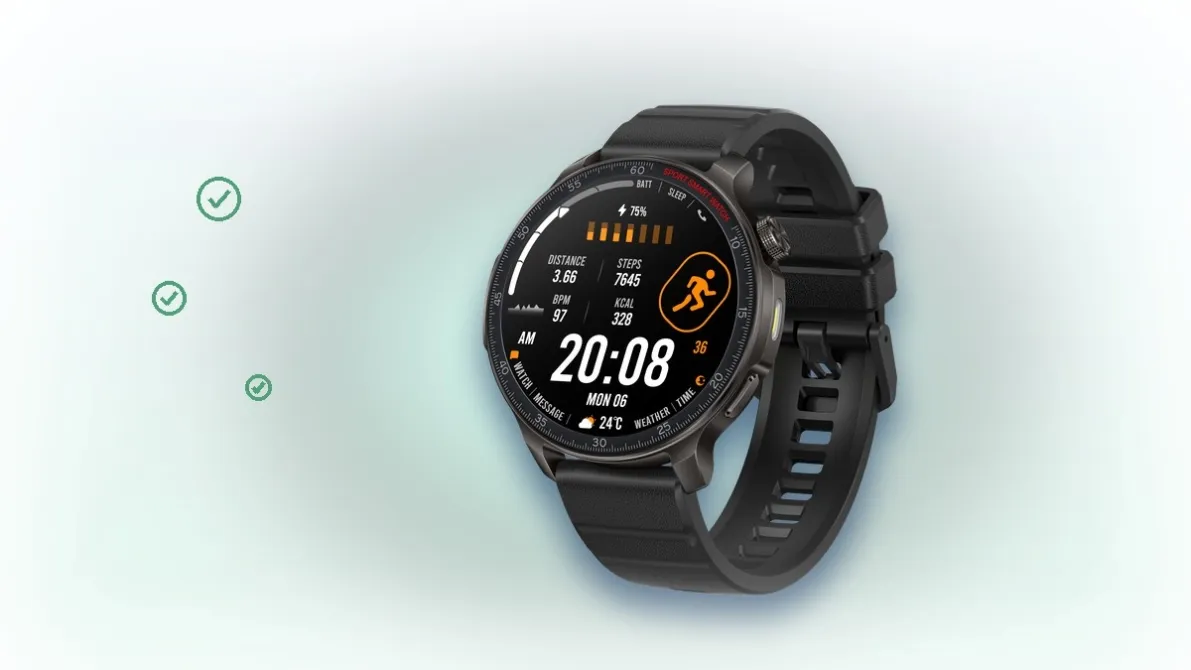
If you want to launch a smartwatch under your own brand, the direct answer is that private labeling runs through six steps in a fixed order: choose a ready-made platform that matches your positioning, write down the customization depth, run a sample round, check the compliance document list, place mass production, and close the launch handoff. The question brand owners ask first is how long it takes: prototyping typically takes about one week, and mass production typically takes about four weeks depending on configuration and quantity. The engineering already exists on a ready-made platform; what you add is your brand identity, your packaging, and your software configuration. Private labeling is six steps, each with a deliverable you can hold and a confirmation point you can enforce. This page is a demonstration draft prepared for site review and is an illustrative example, not real published content. If you are picking a smartwatch for personal use, this page is not for you.
What private labeling covers on a ready-made platform
Private label means putting your brand on a platform that already exists: an engineered, production-ready smartwatch that carries your brand identity, your packaging, and your software or firmware configuration. Deep customization on such a platform covers a wide range, with the exact depth confirmed per model at the sample and quotation stages. Two cooperation modes are both open to you: OEM labeling on an existing platform, and direct purchase of ready stock — sequenced naturally: ready stock to read a market's signal, labeled production once the signal is worth scaling.
The catalog behind this playbook is wider than watches. This site lists 41 ready-made platforms: 20 smartwatches in the SW series, 1 screen-free health band, 18 smart glasses, and 2 smart rings. If your roadmap runs beyond the wrist, audio glasses such as the M01 sit in the same catalog — which makes step 1 a portfolio decision, not a single-product decision.
One boundary keeps this playbook honest: a from-scratch build — new industrial design, new electronics — is feasible, but runs a longer cycle with a heavier investment, and is evaluated case by case. Deep customization on a ready-made platform is the standard private-label path; a from-scratch build exists, but it is not the path a first launch usually needs. The six steps below are written for the platform path.
Where private-label programs lose their launch window
- You are a brand owner preparing to put a smartwatch on the market under your own label.
- The trigger is a launch brief that calls for your logo, your packaging, and your software on hardware you do not engineer yourself.
- The evidence gap is that the private-label process steps, and the realistic time each step takes, are rarely spelled out in plain terms anywhere.
- The rework looks like samples and configurations traveling back and forth for revision while the launch window quietly slides.
- The consequence may be a missed selling season and working cash committed to a configuration you did not actually need.
- The decision is to follow six steps in order and hold every step to a written deliverable and a confirmation point.
Most private-label delay is not a factory problem; it is a decision-sequence problem, and sequence is the one variable fully under your control.
Steps 1 and 2: choose the platform, then define the customization depth
Step 1: match a platform to your brand positioning
Start from the product story your brand needs to tell, not from a spec sheet read at random; the catalog separates the stories cleanly, and two platforms anchor opposite ends. The SW-X5 page lists GPS, a 5ATM water resistance ratings marking, dual-band L1+L5 positioning, an AMOLED display, and Bluetooth calling — a full-function platform that fits an outdoor, sports, or travel line. The SW-KC102 page lists ECG, HRV, body temperature, and SOS functions and positions the model for health monitoring — a different customer, a different channel, and a different set of claims to support. Shortlist one or two platforms whose existing story matches yours; a story you have to bend a platform into is a story your launch copy cannot hold. The deliverable is a shortlist with one line per platform naming why it made the list. The confirmation point is agreement among everyone signing off the launch that the platform story is the brand story.
Step 2: write the customization depth list before any sample request
Customization on a ready-made platform spans brand identity, packaging, software, and firmware parameters, with scope confirmed per model at the sample and quotation stages. Write the list down before the first sample is requested: logo placement, packaging construction and finish, watch faces or app language, the firmware parameters your market expects — each line itemized and marked must-have or nice-to-have. A written list converts sample feedback from taste into checking — the difference between one sample round and three. The deliverable is a one-page customization list. The confirmation point is the supplier confirming, at the quotation stage, which lines are doable on the chosen platform and how each is handled. The customization list you write in step 2 is the document that keeps the sample round in step 3 honest.
Steps 3 and 4: run the sample round, then check the compliance documents
Step 3: hold the sample round to a fixed confirmation point
Prototyping typically takes about one week, so the sample round is short — and short rounds either converge or start looping. Looping begins when the round has no fixed confirmation point: the sample arrives, opinions diverge, a new configuration is requested, and another week begins. Write the confirmation point before the sample ships: name what the sample must demonstrate — every line of your step-2 list — and who signs off. Catalog materials for these platforms declare checks such as button life, dust, waterproof, discharge, temperature, tumble, and screen pressure; read those as catalog-sourced descriptions of what a design is put through, not as accredited laboratory certifications. The deliverable is a sample matched against the step-2 list, plus your written observations. The confirmation point is a signed-off statement that the sample, as configured, is the product you intend to sell. A sample round without a written confirmation point is a look at a prototype that settles nothing.
Step 4: check the compliance document list, and stop there
This step is deliberately narrow: check documents, and leave regulation to the checklist that owns it. Ask which certificates and test documents exist for the chosen platform, and line them up against the requirements of your destination markets and channels before production is discussed. A dedicated certification checklist for US and EU importers on this site covers the document-level detail; at this step it is enough to run the listing exercise — document requested, document received, document matched to market. The deliverable is a compliance document list with a status against every line. The confirmation point is an empty open-items column before step 5 begins. A gap left here does not announce itself; it waits for a border inspection or a marketplace audit.
Steps 5 and 6: place production, then close the handoff
Step 5: place production with the MOQ ladder on the table
Mass production typically takes about four weeks depending on configuration and quantity, and the order you place is shaped by the MOQ structure. Standard MOQ is 3,000 pieces per model. First cooperation is negotiable and commonly lands at 300–500 pieces. A minimum trial order of 100 pieces can be accepted case by case, with details discussed when the order is placed. Read that as a ladder rather than a wall: a 100-piece trial settles demand questions before a larger commitment, 300–500 pieces fits a first labeled run, and 3,000 pieces is where the standard structure applies. Because production length depends on configuration and quantity, freeze the step-3 configuration before the production clock starts, and keep the quantity honest against demand your channels have shown. The deliverable is a placed order with quantity, configuration, and dates in writing. The confirmation point is an acknowledged production start, with the typical four-week clock counted backward from your launch window.
Step 6: close the launch handoff with a checklist of zeros
The handoff converts a finished production run into your product on a shelf or a listing. Work from a written checklist: packaging approved against the sample, software and firmware configured as confirmed at the sample and quotation stages, compliance documents from step 4 filed for your records, and listing copy written against the frozen configuration, so every claim on your product page matches what is inside the box. The deliverable is that checklist with every line closed. The confirmation point is nothing marked open on launch day. A configuration change after production starts is the one mistake this playbook cannot absorb, which is why every sign-off from step 3 onward is worth its ink.
Run your program through the worksheet
Note your six-step status below before you send a single inquiry.
Work through five fields, one at a time:
- Platform shortlist — the one or two ready-made platforms whose existing story matches your brand positioning, each with the reason it made the list
- Customization depth list — logo, packaging, software, and firmware parameters, itemized and split into must-have and nice-to-have
- Sample confirmation point — what the sample round must demonstrate, and who signs off before production is discussed
- Compliance document list — the certificates and test documents to request, and the markets each document must match
- Production plan — the MOQ tier you are targeting, the quantity, and the launch window the production clock has to respect
On how this page works: nothing here collects data, and no reply of any kind is promised. The working channel is your own email or WhatsApp, exercised under your own judgment, and this page is maintained by the iWearable content team. Whatever conclusions you reach stay local — in your notes, in your files, on your side of the table. Treat the five fields as the minimum a private-label plan needs to hold a schedule; if a field cannot be filled yet, that is not an obstacle, it is the finding.
Copyable message template:
>
Hi iWearable, I am planning a private-label smartwatch under my own brand. My brand positioning: [fill]. The platform I am considering: [fill]. My customization depth list: [fill]. My target quantity and launch window: [fill]. I would like to request a quote and discuss configurations for a sample round.
Work the six steps in order, let each deliverable earn its confirmation point, and the launch window set in step 1 is still standing in step 6.