Oct 6, 2026Blog
What Is a Screenless Fitness Tracker? How Bands Without a Display Work
A screenless fitness tracker records steps, heart rate, sleep and recovery without a display — here is how the no-screen band works and who it suits.
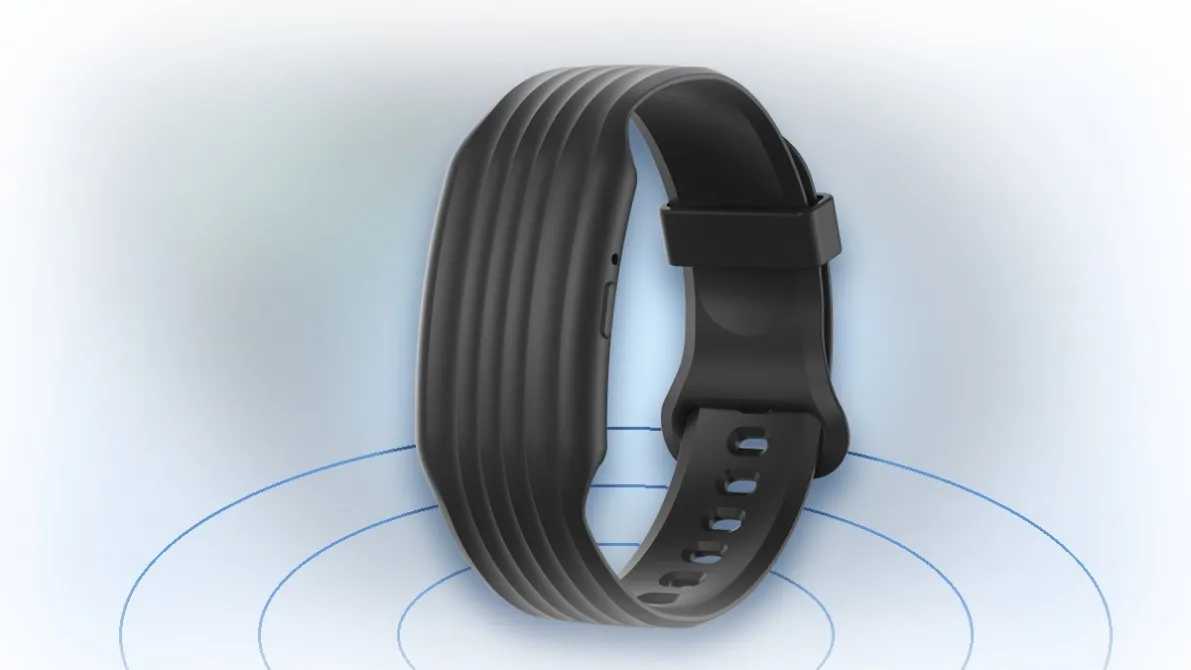
A screenless fitness tracker is a health band built without a display: sensors on the underside record steps, heart rate, sleep and recovery around the clock, while all of the data lives in your phone app instead of on your wrist. The category exists for a simple reason — removing the screen is what makes a fitness band lighter, more comfortable and dramatically longer-lasting than a smartwatch.
If you have ever abandoned a fitness tracker because you were tired of charging it every three days, or because the buzzing screen interrupted every meeting and meal, this category was designed for you. And if you are a brand evaluating the wearable market, the screenless segment has quietly become one of the fastest entry points — with mature hardware platforms, validated health-sensor stacks and white-label app ecosystems already in place.
How a Fitness Band Without a Screen Actually Works
Strip away the display and three components do all the work: a sensor stack, a Bluetooth chip, and a small battery.
The sensor stack sits against the skin. An optical PPG sensor flashes green LED light into the wrist and reads the reflected pulse to compute heart rate continuously — 24 hours a day, not just during workouts. An accelerometer measures motion, steps and posture. In deeper health configurations, additional optics track SpO2 (blood oxygen), pulse-wave analysis estimates blood pressure trends, and beat-to-beat variability yields HRV, stress and sleep staging.
The Bluetooth chip — BLE 5.3 in current reference designs — wakes periodically to sync everything to your phone. The companion app becomes the display: trends, scores, sleep reports and workout summaries render at full size, in your language, with history the wrist could never show.
Because there is no panel to light, the whole system spends most of its life in low-power sleep. That single design decision is why a screenless fitness tracker runs 10–20 days on a 200 mAh battery while a typical smartwatch needs charging every 3–7 days.
What a Screenless Tracker Measures Today
The category has quietly become a full health stack rather than a step counter:
- Heart rate — continuous 24/7 optical tracking with resting-HR trends and workout zones
- Blood pressure — pulse-wave trend estimation calibrated to the wearer
- SpO2 — blood-oxygen sensing, including night-time lows
- Sleep — automatic staging (light, deep, REM), quality scoring and breathing quality
- HRV and stress — beat-to-beat variability as a daily stress-load window
- Women's health — cycle-aware tracking and reminders
- Sports — 110+ workout modes with 6 auto-recognized activities
The reference screenless platform in this collection — a 19.3 g woven-band build rated 3ATM — carries the full set as standard, with readings syncing to the Flywear app (developed by FitCloudPro).
Who a No-Screen Band Suits Best
Sleep-focused users are the clearest fit. Sleep tracking demands a comfortable band worn all night — no charging ritual every evening, no rigid watch case pressing into the wrist, no notifications glowing at 2 a.m. Ten-plus day runtime means the data series stays unbroken for weeks.
Battery-anxious users are the second group. If your current watch dies mid-afternoon, a band that measures in weeks rather than days removes the anxiety entirely.
Gift and entry buyers are the third: the category delivers genuine health tracking at an accessible price, which is also why brands increasingly use it as the entry SKU of a wearable line.
What It Cannot Do — Honestly
A screenless band shows nothing in real time: no notifications, no on-wrist workout maps, no tap-to-pay. If those matter daily, a smartwatch remains the right tool. The band also depends on the phone app for any visualization — the wrist is the sensor, the phone is the screen.
Understanding this division honestly is what makes the category defensible for brands: the product promises better data with less interference, and it delivers exactly that.
For Brands: Why the Screenless Segment Is an Easy Entry
For wearable brands, the no-display segment is the lowest-risk entry into the health market. The hardware platform is proven, the sensor stack is validated, the certification burden is lighter (fewer components, simpler radio profile), and the app layer — where the brand actually lives — is white-label ready.
On this site the screenless line spans a 19.3 g woven-band reference model (200 mAh, 10–20 days, full HR/BP/SpO2/sleep/HRV/stress/cycle tracking, Flywear app) and a screen-free ECG band with SOS calling for health-first positioning. Branding, strap options and packaging are confirmed per model at the sampling and quotation stage; trial orders from 100 pcs are negotiable case by case.
Frequently Asked Questions
Does a screenless fitness tracker work without a phone? It records without one, but you need the app to see the data. Readings sync when the phone is in range.
How accurate is blood pressure on a band? It is a pulse-wave trend for direction, calibrated per user — not a clinical diagnosis. Treat it as a daily signal, not a medical reading.
Can I swim with it? The 3ATM rating covers splashes and sweat; check the specific model page for immersion guidance.
How long does the battery really last? 10–20 days of tracked use on the 200 mAh cell — the no-display design is what makes the number possible.
Choosing Your Screenless Tracker: A Short Checklist
- Health set — confirm HR, sleep and SpO2 as the baseline; add BP, HRV, stress and women's health where the app supports them
- Battery claim — 10–20 days with a real sensor load beats 30-day figures with everything off
- Comfort — weight (19 g class), strap material (woven vs silicone) and 3ATM splash rating decide whether it stays on 24/7
- App — the app is the product's face: language coverage, data export and branding options
- Certification — CE/FCC/RoHS documentation and battery certificates, confirmed in writing before production
Work through the five points against any band you evaluate — including ours — and the right choice will be obvious from the data.
FAQ
Does a screenless band work without a phone? It records without one, but the app is needed to see the data. Readings sync when the phone is in range.
Can I swim with a 3ATM band? 3ATM covers splashes and sweat; check the model page for immersion guidance.
Is blood pressure on a band medically accurate? It is a calibrated trend for daily direction — not a substitute for a clinical measurement.
How long does setup take? Pair with the app, set your profile, done — under five minutes.