Oct 6, 2026Blog
What It Really Costs to Launch a Branded Smartwatch
A five-layer budget framework with what to request from suppliers at each layer.
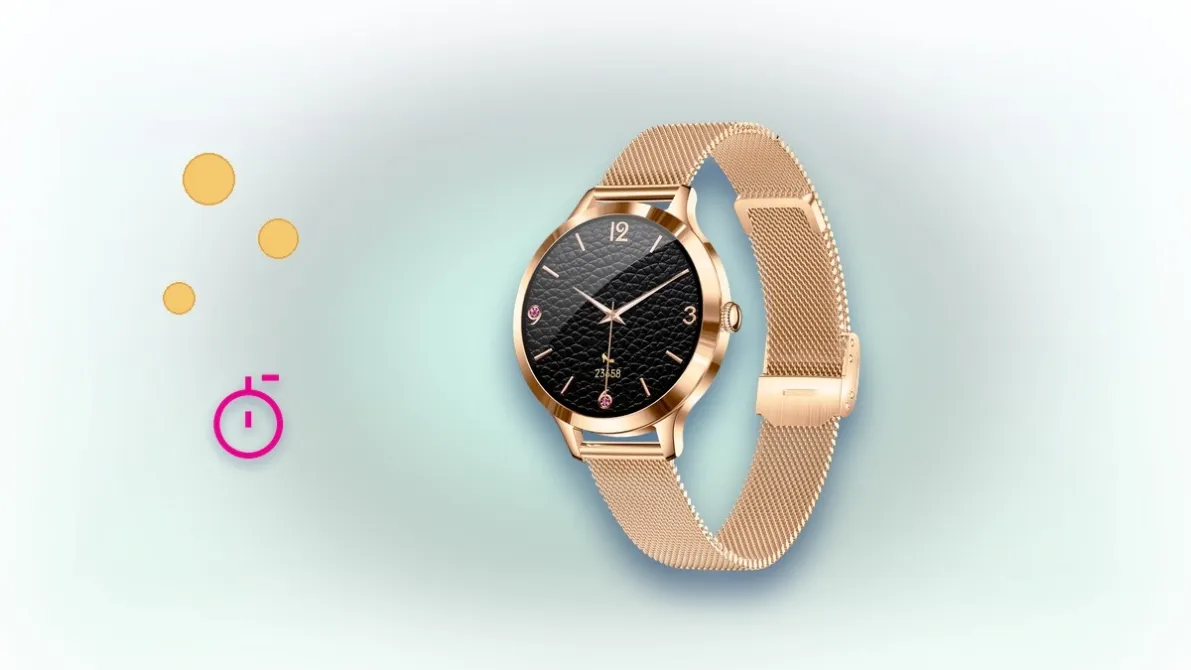
If you are budgeting a first branded smartwatch, every early conversation tends to collapse into one number — the per-unit price — and that collapse is exactly why launch budgets break. The direct answer: a branded smartwatch launch budget is a stack of five layers — platform and configuration, customization and sampling, compliance documentation, production, and logistics and launch — and the way to estimate it is to cost each layer separately, then request an itemized quotation for every layer before you commit to anything. A launch budget is built as a stack first and priced as a stack second. No currency figure appears anywhere on this page; the framework is deliberately about structure, because amounts without the stack behind them are how launches run out of money. If you are picking a smartwatch for personal use, this page is not for you. This page is a demonstration draft prepared for site review and is an illustrative example, not real published content.
Why a unit price is not a launch budget
- You are a brand team — a DTC operator, a marketplace seller, or a regional distributor — building the budget for a first smartwatch under your own label.
- The trigger is that the money has to be counted before any purchase order is signed, because the launch date, the order quantity, and the cash position all move together.
- The evidence gap is that every conversation so far has revolved around a single per-unit price, while nothing on the table describes what happens before production starts or after the goods leave the factory.
- The rework arrives when a unit-price-only comparison turns out to have left sampling rounds, compliance documents, and configuration changes out of the plan, and each omission returns as an unplanned cost conversation.
- The consequence is a budget that breaks mid-launch: the unpriced layers arrive one after another, and the money set aside no longer covers the stack.
- The decision is to build the full budget stack first and then request itemized quotations layer by layer, so that every layer is priced on paper before it has to be paid in cash.
A unit price is one line of a launch budget, never the budget itself.
The five layers of a branded smartwatch launch budget
The framework is simple to state: a launch budget stacks five layers, each with its own estimation method and its own materials to request from the supplier. The table below is the whole framework on one screen; the sections after it work through each layer in order.
Budget layer | How to estimate this layer | What to request from the supplier |
|---|---|---|
Platform and configuration | Shortlist ready-made platforms, then fix a configuration tier — case material, display class, sensors, calling — because the tier sets the budget base | |
Customization and sampling | List every customization line — logo, packaging, software, firmware parameters — and multiply by a realistic number of sample rounds | A customization scope sheet and a sample plan stating what each round delivers |
Compliance documentation | Check the required documents against each target market before ordering, not after production | The document package per model and per target market, so gaps surface early |
Production | Pick a quantity tier and apply unit-price logic inside that tier: standard 3,000 pcs per model, a first order negotiable down to 300–500 pcs, or a minimum 100 pcs trial order case by case | An itemized quotation per quantity tier, showing what changes between tiers |
Logistics and launch | Confirm every line against your order terms, since freight, insurance, and clearance responsibilities move with the arrangement | A delivery scope that itemizes which party carries which line |
Estimating the stack layer by layer is what turns a supplier conversation into a budget. Two cooperation modes sit on the same framework: OEM branding on a ready platform and direct stock purchase are both viable here, and the mode you choose mainly changes how much of layers two and three you carry.
Estimate each layer before you commit
Layer 1: platform and configuration set the base
Start from ready-made platforms rather than a ground-up design. The catalog on this site holds 41 ready-built platforms — 20 smartwatches, one screen-free health band, 18 pairs of smart glasses, and two smart rings — under a one-stop smart wearable solution that has been in place since 2013. Choosing from a catalog does not fix the base; the configuration tier you specify sets it. The SW-T8Ultra page on this site lists a 40mm ultra-slim smartwatch with a SUS304 CNC case, an AMOLED display, and Bluetooth calling — each entry a configuration decision with a cost consequence, which is why the same catalog supports very different budget bases. The platform you shortlist and the configuration tier you specify set the base every other layer is built on. What to request from the supplier: the platform catalog and a configuration sheet per shortlisted model, itemized by configuration option.
Layer 2: customization and sampling turn a platform into your product
The estimate here is a customization list times a number of sample rounds. The list covers everything your brand adds to the ready platform — logo placement, packaging, software touches, firmware parameters — and this depth of customization is done on ready platforms as a matter of course, confirmed per model at the sampling and quotation stage. The realistic part is the rounds: a first sample round typically takes about one week, depending on the model and the scope of the round, but first rounds exist to be reacted to, and a configuration change usually means another round. Budgeting a single round for a customized build is the classic underestimate. Treat the estimate as a customization list multiplied by sample rounds, and treat the round count as a plan rather than a hope. What to request from the supplier: a customization scope sheet and a sample plan that states what each round delivers and what a configuration change does to the schedule.
Layer 3: compliance documentation, checked per target market
Documents are a budget layer because they are requested, waited on, and sometimes arranged, and because the set differs by destination market: what one market requires, its neighbor may not. The estimation method is a per-market document check made before ordering — list the markets you will sell into, establish what documents each requires for this product category, and confirm which of those the supplier provides per model and which you must arrange yourself. A gap discovered here is a planning item; the same gap discovered after production is a launch delay. This layer is deep enough to have its own treatment: the certification checklist for US and EU importers on this site walks it line by line — the checklist names the documents, and this framework places their cost in the right layer. What to request from the supplier: the document package per model and per target market, so the gaps surface while they are still easy to close.
Layer 4: production quantity tiers and unit-price logic
The production layer is estimated as a quantity tier times the unit-price logic that applies inside that tier. Three tiers cover the common cases: the standard minimum is 3,000 pcs per model; a first cooperation is negotiable and commonly lands at 300–500 pcs; and a minimum trial order of 100 pcs can be accepted case by case, with the specifics discussed when the order is placed. These tiers are negotiating positions, not fixed walls, and the unit-price logic differs from tier to tier — a quotation for one tier says little about another, so estimate in the tier you actually intend to order in. Production itself typically takes about four weeks, depending on configuration and quantity. For a lower-complexity first line the structure is identical but the contents shift: the FT-KR96Pro page on this site lists ECG, HRV, body temperature readings, and SOS functions in a screen-free tracker, and a first line on that kind of platform stretches layers two and three differently than a flagship watch line, while the tier logic stays as described here. Your quantity tier decides which cost logic applies, and a single quotation will not tell you what the other tiers look like. What to request from the supplier: an itemized quotation per quantity tier, showing what changes between tiers.
Layer 5: logistics and launch, confirmed line by line
The last layer is the one most often left entirely unpriced, because its lines move with the order terms. Who arranges freight, who carries insurance, who handles export and import clearance, and which documents travel with the goods are all functions of the arrangement between the two parties — the same order can be shipped under different terms, and each term shifts lines from one side of the table to the other. That is why this layer is estimated as a list of lines to confirm rather than a number to guess: no figure belongs here until the terms are fixed. The method is to walk the delivery scope against your order terms line by line and mark, for every line, which party carries it. What to request from the supplier: an itemized delivery scope that states which party carries which line, confirmed before the purchase order, not at shipment.
Stack your budget on the worksheet
Build your five-layer budget stack on the worksheet below, then take it with you when you request quotations.
Work through five fields, one at a time:
- Platform and configuration tier — the shortlisted platform and the configuration entries your budget assumes
- Customization list and sample rounds — every customization line, and the number of sample rounds the plan allows, with each round typically about one week
- Compliance document package — the target markets, the documents each requires, and the supplier materials to request per model
- Quantity tier and production window — the tier under discussion (standard 3,000 pcs per model, a first order negotiable to 300–500 pcs, or a minimum 100 pcs trial case by case) and the production window typically about four weeks
- Logistics and launch lines — the delivery-scope lines to confirm against your order terms, with the carrying party marked per line
On how this page works: nothing here collects data, and no reply of any kind is promised. The working channel is your own email or WhatsApp, exercised under your own judgment, and this page is maintained by the iWearable content team. Whatever conclusions you reach stay local — in your notes, in your files, on your side of the table. Treat the five fields as the minimum a launch budget needs before it faces a supplier; if a field cannot be filled yet, that is not an obstacle, it is the next question to ask.
Copyable message template:
>
Hi iWearable, I am planning the budget for a branded smartwatch launch. My platform shortlist and configuration tier: [fill]. My customization list and sample-round plan: [fill]. My target markets and required documents: [fill]. My quantity tier under discussion: [fill]. Please send an itemized quotation layer by layer, and I would also like to discuss configurations for the models on my list.
Bring the finished stack to the conversation and ask for the quotation the same way — layer by layer — so the offer you finally compare covers everything the launch will actually spend.