Oct 6, 2026Blog
Smart Ring Private Label: A Brand Owner's Entry Guide
What differs from watches, two ready ring platforms (R1, V8), and trial-order terms for first-time brands.
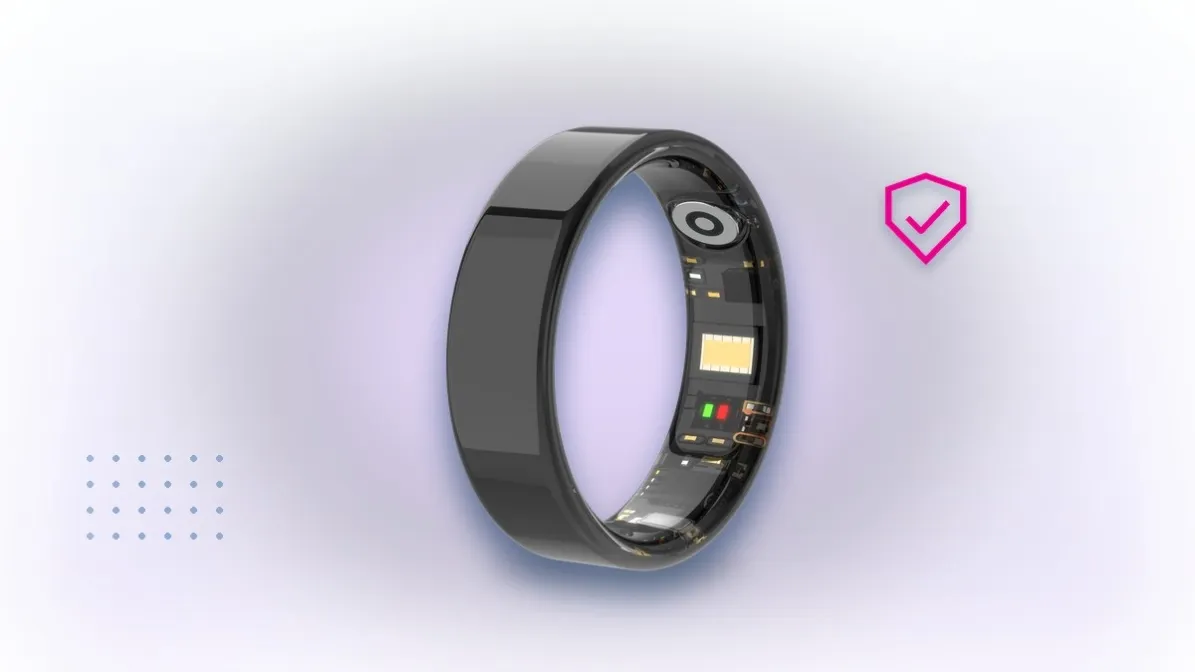
If you run a brand — direct-to-consumer, marketplace, or regional distribution — and you have watched smart rings grow from a novelty into a category, the entry question is no longer whether but how. The direct answer: evaluate a smart ring as a ring, not as a small watch, because the decisions that make or break the program are sizing, the trade-offs sealed inside a tiny case, and an app experience your customers will judge you on. The ready-made platform the catalog on this site already includes two smart rings — one listed as an ultra-thin health tracking ring, the other as an ECG smart ring with advanced health monitoring — so the fastest honest path is to match your brand position to one of them, confirm customization scope at sampling, and place a small trial order before any full run. Enter the ring category by evaluating it on its own terms, and let a small first order buy the evidence a larger one requires. No specification, timeline, or commercial figure on this page is a guarantee; every number carries the qualifier it was confirmed under. If you are picking a smart ring for your own finger, this page is not for you. This page is a demonstration draft prepared for site review and is an illustrative example, not real published content.
A visible category opportunity, an invisible hardware decision
- You are a brand owner who has watched the smart ring category grow and decided the window to enter is now.
- The trigger is the first purchase order: you want your own brand on it — your logo, your packaging, your app listing — not a generic product resold under someone else's name.
- The evidence gap is that ring hardware reads like a black box: sensors, battery, and sizing trade-offs are sealed inside a case too small to inspect, and no product page shows you how they were balanced.
- The rework looks like running your smartwatch evaluation checklist against rings and watching it stall, because the questions that anchor a watch review — display, GPS, on-device controls — are not the questions that decide a ring.
- The consequence is a stalled program in a moving market: while the evaluation drags on, a competitor finalizes its ring line and takes the shelf space, the search results, and the early reviews.
- The decision is to switch to a ring-specific evaluation checklist, line the two ready-made platforms up against your brand position, and convert the findings into a small trial order.
A ring program rarely fails on ambition; it fails on an evaluation method borrowed from the wrong category.
Why a smart ring is not a small smartwatch
A ring and a watch share sensors, wireless connections, and a companion app, and almost nothing else about how a buyer experiences them.
Sizing turns one product into a size run
A watch ships as one physical object; a ring has to fit a finger, and fingers come in a range no single mold can cover. The moment you private-label a ring, you are really private-labeling a size run: every size becomes its own stock-keeping unit, with its own forecast and its own share of the order quantity. Sizing is also a comfort decision: a ring is either worn all day unnoticed or it comes off and stays in a drawer — fit becomes a retention question, not a packaging detail. None of this is visible on a product page, so carry concrete questions into sampling: which sizes the platform covers, how the run is graded, and how the order quantity spreads across sizes.
Every trade-off hides inside a tiny case
A watch case has room for a display, a battery sized to run it, and the electronics beside both. A ring case offers no such generosity: inside a volume too small to inspect, the sensing elements, the battery, and the connections between them compete for the same space, and every gain on one side is a loss on another. More sensing capability can mean a shorter run between charges or a thicker profile; a thinner, lighter ring can mean calmer specifications across the board; and nothing about that balance is readable from the outside. And because the form factor sits on the finger, the physical result of these trade-offs — how the ring feels after a full day — is the specification customers actually review. In a ring, the decisive trade-offs are invisible by design, so the only honest way to read them is on a sample on your own hand.
Your selling points live in the app
Whatever a ring measures, almost none of it is shown on the device itself — the value is assembled and presented in the companion app. That moves the center of gravity of the offer: the trend screens, the way a reading is explained, and the morning summary are where health tracking either becomes a real experience or becomes a complaint thread. It also narrows what you can safely claim: marketing can promise only what the device and the app together deliver, and a feature the app presents poorly is a feature your copy should stay quiet about. So an app walkthrough belongs in your evaluation alongside the hardware samples, checked claim by claim against what you intend to publish. On a smart ring, the app is not an accessory; it is where your brand's promise is kept or quietly broken.
Two ready-made platforms, two brand positions
A private-label program does not need a custom platform to start; it needs the right existing one. The ready-made catalog on this site lists two smart ring platforms, and they map naturally onto two different brand positions.
The R1 lists an ultra-thin health tracking ring — a position built on everyday health tracking in a form designed to be forgotten on the finger, suited to brands whose audience wants a quiet, continuous read on their health rather than a headline feature fight.
The V8 lists an ECG smart ring with advanced health monitoring. That is a position one step more specific: ECG is a named capability, and "advanced health monitoring" is the page's own phrase — a firmer feature for a brand to lead with. It suits brands that want the health story anchored by a headline capability rather than general tracking. One rule governs both platforms: keep every health wording faithful to what the product page itself claims. "Health tracking" and "ECG" are claims these pages make; wording that drifts beyond them — promising outcomes the pages do not claim — is not supported here and should not appear in your copy.
Match the platform to the position you can defend, and hold health wording inside what the page itself states.
The same health line does not stop at rings: the SW-KC102 smartwatch page lists ECG and health monitoring features in the same catalog — one way a ring position can later extend across categories.
From first sample to trial order: the terms in the open
Three sets of commercial terms frame the entry, and all of them are negotiating ranges rather than promises.
The first is order quantity. The standard minimum order quantity is 3,000 pcs per model. For a first cooperation, that figure is negotiable, and it commonly lands between 300 and 500 pcs. Below that range, a minimum trial order of 100 pcs can be accepted case by case, with specifics discussed when the order is placed. Write those words — negotiable, case by case — into your planning notes alongside the numbers, because they move with the configuration and the conversation.
The second is timing. Sampling typically takes about 1 week, and mass production typically takes about 4 weeks, depending on configuration and quantity. Both are typical values rather than commitments, and your customization choices are what move them.
The third is customization scope. On these ready-made platforms, deep customization is available: brand logo, packaging, software, firmware parameters, and comparable items, confirmed model by model at the sampling and quotation stage. Both cooperation modes are welcomed — OEM private-label production with your brand on the product, and direct purchase of finished stock. That combination supports a deliberately cautious entry: validate demand with finished stock, then move to full private-label customization once the position is proven. A from-scratch ODM path — an entirely new appearance and new electronics design — is feasible but longer, heavier on investment, and evaluated case by case — a real path, simply not the recommended first step into rings, and nothing on this page dismisses it. Market-entry certification checklist for your destination regions is a separate checklist and deliberately out of scope here.
Treat every commercial figure as a range to negotiate, and let a 100-pc trial order buy the evidence a full launch needs.
Run your ring entry on the worksheet
Fill in the five fields below before requesting samples, and fill them in again before the trial order.
Work through five fields, one at a time:
- Brand position — the story your brand will lead with: everyday health tracking, or an ECG-led advanced health monitoring position
- Platform candidate — the ready-made ring the position maps to, named as R1 or V8, with the exact page claim you can defend
- Size run plan — the ring sizes to confirm at sampling, and how the run spreads across your first order quantity
- App presentation check — what the companion app walkthrough must show for each claim you intend to publish
- Trial order frame — the quantity tier under discussion, from 100 pcs case by case upward, with sampling and production times noted as typical figures
On how this page works: nothing here collects data, and no reply of any kind is promised. The working channel is your own email or WhatsApp, exercised under your own judgment, and this page is maintained by the iWearable content team. Whatever conclusions you reach stay local — in your notes, in your files, on your side of the table. Treat the five fields as the minimum a ring entry needs before its first purchase order; if a field cannot be filled yet, that is not an obstacle, it is the finding.
Copyable message template:
>
Hi iWearable, I am planning a smart ring private-label program. My brand position: [fill]. The platform I am considering: R1 or V8. My size run plan: [fill]. I would like to request a quote and discuss configurations for a trial order.
Keep the completed worksheet beside your launch plan, and let samples, the app walkthrough, and a small first order confirm every line before your brand goes on the box.