Oct 6, 2026Blog
Smart Ring OEM Guide: From CAD to Mass Production
Launch a branded smart ring: proven platform, sensor set, material options, sizing kits, MOQ from 100 pcs and a validation path from CAD to mass production.
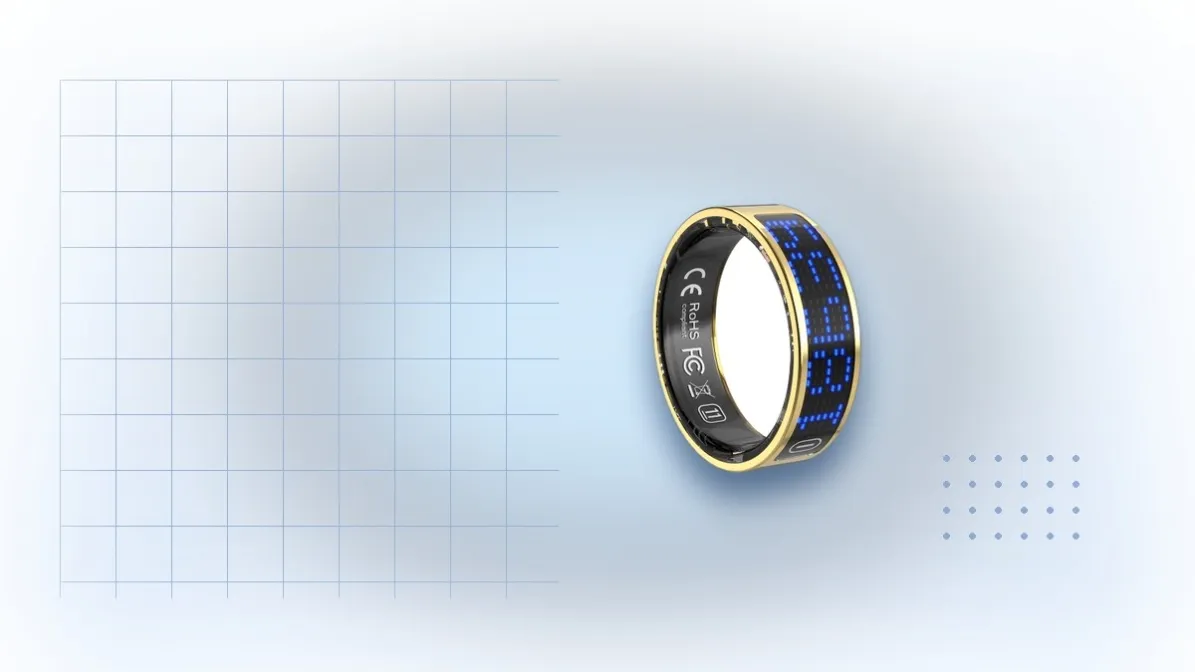
A smart ring OEM programme lets brands launch a health-tracking ring without the 12–18 month development cycle of a from-scratch design. This guide walks through what a smart ring platform includes, what you customise, and the numbers that get you started.
Why Smart Rings, Why Now
The smart ring market has grown from a niche product to a recognised health-wearable category, led by Oura and Samsung. For brands, the entry barrier is lower than smartwatches: the hardware is miniaturised and proven, the app ecosystem is built, and the price point sits between a fitness band and a premium smartwatch — with margins to match.
The category also has a unique advantage: the ring is worn 24/7 (including sleep) because it is comfortable and needs charging only every 5–7 days. This produces continuous health data that wrist devices struggle to match.
The Reference Platform
- Sensors — PPG heart rate, SpO2, skin temperature, accelerometer
- ECG (health-first models) — single-lead electrocardiogram
- Battery — 15–22 mAh, 5–7 days runtime, wireless charging dock
- Waterproof — typically 5ATM
- Materials — titanium, ceramic or epoxy-coated alloy exterior
- App — companion app with health dashboard, trends and insights
What You Customise: The Brand Layer
- App white-labeling — your brand name and identity in the companion app
- Materials and finish — titanium, ceramic or epoxy, with PVD colour options
- Sizing programme — sizing kits, half sizes, exchange policy
- Packaging — retail box, sizing kit box, charging dock branding
- Firmware — measurement intervals, goal defaults, app UI strings
The Numbers
Standard MOQ is 3,000 pcs per model. First orders are negotiable — commonly 300–500 pcs. 100-pc trial orders are accepted case by case. Sampling runs about two weeks (the ring is a precision device with a sensor calibration step); mass production about six weeks.
Compliance: What to Confirm
Smart rings are health devices — confirm the regulatory path for your destination market. The certificate package should include CE/FCC/RoHS documentation, battery certifications (UN38.3 for shipping), and any health-claim substantiation data. Radio equipment (BLE) and PPG sensor calibration data should be available from the supplier.
The Launch Path
- Sizing kit programme — test fit across your market
- Sample order (10–50 pcs) with your branding on the app and packaging
- Validation — sensor accuracy, app UX, packaging proof
- First production run at negotiated quantity
- Second order with configuration informed by first-batch data
Brands that start with a smart ring typically expand to bands or watches once the health-app ecosystem is proven — the category is a sticky entry point with high daily engagement.
FAQ
What is the MOQ for smart rings? Standard 3,000 pcs; first orders negotiable to 300–500 pcs; 100-pc trials case by case.
How long does sampling take? About 2 weeks including sensor calibration and app branding.
What certificates are needed? CE/FCC/RoHS for the destination market, plus UN38.3 for battery shipping.
Key Specifications
Spec | Detail |
|---|---|
MOQ | 3,000 pcs (negotiable to 300–500) |
Trial order | 100 pcs case by case |
Sampling | About 2 weeks |
Mass production | About 6 weeks |
Customization | App, materials, finish, packaging |
Certificates | CE/FCC/RoHS + battery |