Oct 6, 2026Blog
Titanium vs Ceramic Smart Rings: Material Guide for OEM Buyers
Titanium, ceramic and epoxy-coated smart rings each have different weight, durability and skin-feel properties — a material comparison for OEM buyers.
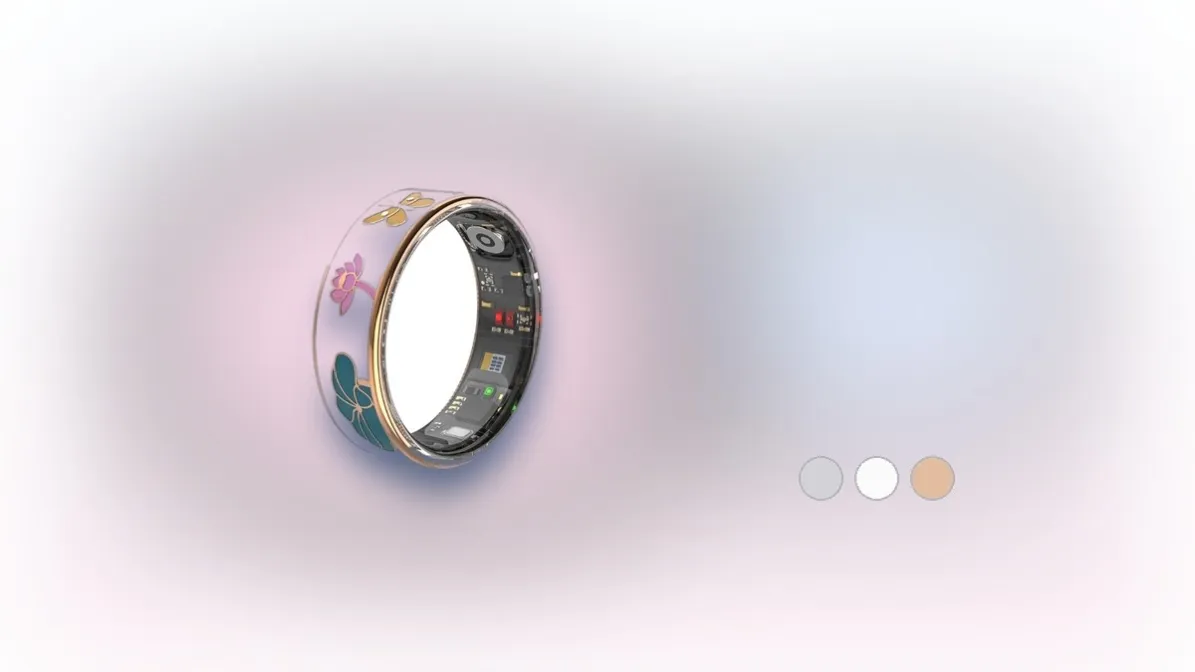
Smart ring materials matter for three reasons: the ring is worn 24/7, it houses precision sensors that need consistent skin contact, and the finish affects how the product photographs and feels in-hand. This guide compares the three main materials used in smart rings — titanium, ceramic and epoxy-coated metals — from an OEM buyer's perspective.
Titanium: Lightweight and Durable
Titanium (typically Grade 5) is the premium option for smart ring exteriors. It weighs about 40% less than stainless steel, resists corrosion and scratches, and has a warm grey tone that photographs well. Medical-grade titanium is also hypoallergenic — important for a device worn 24/7.
The downside is cost: titanium machining is more expensive than epoxy or ceramic, which raises the unit price. For brands targeting the premium health market, titanium signals quality. For entry-level positioning, epoxy or ceramic may be more cost-effective.
Ceramic: Scratch-Proof but Brittle
Ceramic (typically zirconia) is scratch-proof — harder than titanium on the Mohs scale — and has a smooth, polished surface that feels cool on the skin. It is available in colours beyond grey: black, white and rose gold ceramic are common.
The trade-off is brittleness: ceramic can crack if dropped on a hard surface, while titanium would dent. For a product worn on the finger — the most bumped and knocked body part — this matters for return rates and warranty claims.
Epoxy-Coated Metal: The Cost-Effective Option
Most entry-level smart rings use an epoxy coating over a metal (often zinc alloy or stainless steel) core. The epoxy provides colour (black, grey, rose gold) and a smooth finish at a fraction of the cost of titanium or ceramic.
The trade-off: epoxy can chip or wear over time, especially at the edges. For a 24/7 health device, the coating needs to be thick enough to survive daily wear — confirm the epoxy thickness and hardness spec with the supplier.
Weight Comparison
Material | Density (g/cm³) | Feel on finger |
|---|---|---|
Titanium | 4.5 | Light, warm |
Ceramic (zirconia) | 6.0 | Smooth, cool |
Epoxy-coated alloy | 8.0 | Heavier, standard |
Weight matters for sleep tracking — a heavy ring is more likely to be removed before bed, breaking the data series.
For OEM Buyers: What to Confirm
- Material grade (Grade 5 titanium vs commercial pure)
- Surface finish (matte, polished, PVD colour)
- Inner surface finish (must be smooth for PPG accuracy)
- Allergy testing (nickel-free certification for EU market)
- Epoxy thickness and hardness spec (for coated models)
- Drop test results (1m onto concrete is the standard)
Confirm all material specs with the supplier at the sampling stage — the smart ring collection on this site includes ECG models in multiple finishes.
FAQ
Which material is best for sleep tracking? All three work — weight matters more: lighter rings are less likely to be removed at night.
Does titanium interfere with sensors? No — the sensor window is separate from the case material. Titanium is hypoallergenic and safe for 24/7 wear.
Can ceramic crack? Yes — ceramic is scratch-proof but brittle. Drop testing data should be confirmed with the supplier.
Key Specifications
Spec | Detail |
|---|---|
Titanium | Grade 5, lightweight, hypoallergenic |
Ceramic | Zirconia, scratch-proof, brittle |
Epoxy | Cost-effective, can chip |
Weight | 3–5 g depending on material |
Finish | Matte / polished / PVD colour |