Oct 6, 2026Blog
Open-Ear Audio Glasses: How They Work and Who They're For
Audio glasses use open-ear directional speakers to play music and calls without blocking your ears — here is how the technology works and who benefits most.
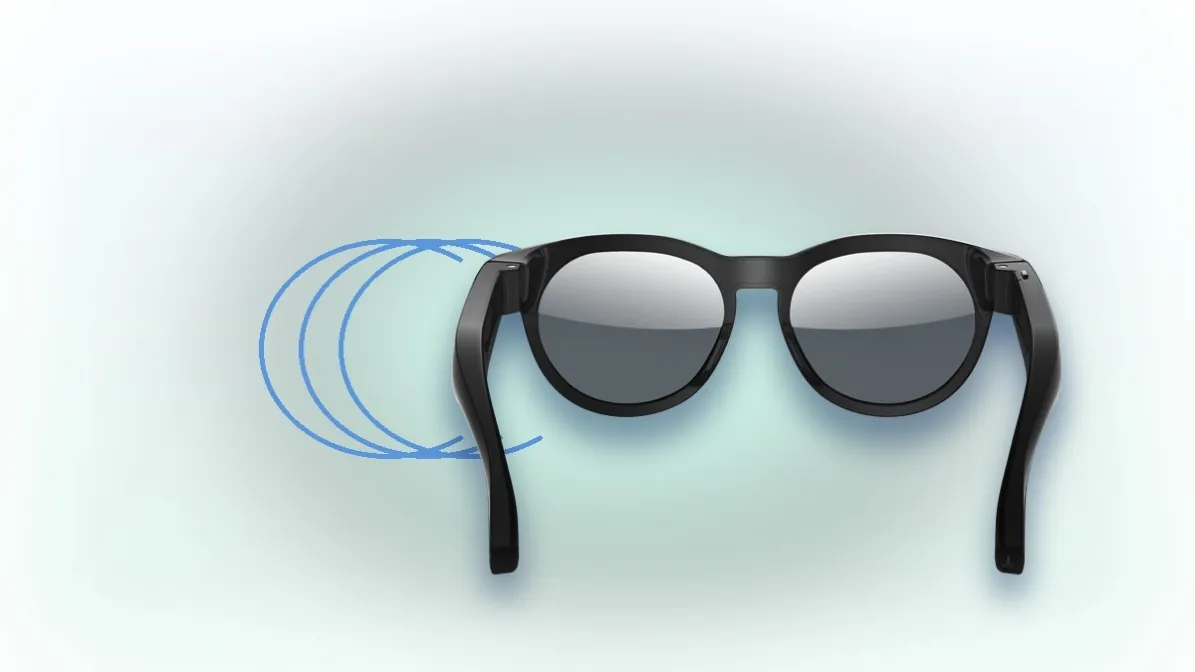
Open-ear audio glasses play music, podcasts and phone calls through directional speakers built into the temple arms — sound reaches your ear without blocking the ear canal. You hear your audio and your environment simultaneously. This guide explains the technology, the sound quality and who benefits most from the open-ear format.
How Open-Ear Audio Works
Micro-speakers in the temple tips point sound toward the ear canal opening. Directional acoustic design focuses the sound wave so it reaches the ear without an in-ear or over-ear seal. The result: you hear your podcast and the traffic around you, your call and your colleague walking past.
ENC (environmental noise cancellation) dual microphones in the bridge clean up your voice for calls, filtering wind and ambient noise.
Sound Quality: What to Expect
Open-ear audio cannot match sealed in-ear monitors for bass response — physics doesn't allow it. What it delivers is clear mid-range (voices and podcasts sound excellent), sufficient bass for casual music, and spatial awareness that in-ear devices can never provide.
For calls, the ENC dual-mic array produces voice quality comparable to a phone call — clear enough for business, with the added benefit of eye contact during conversations.
Battery Life
Audio glasses run 6–9 hours of continuous playback on a single charge, depending on volume. The glasses charge in a case or via magnetic cable. Standby is measured in weeks because the glasses only draw power when audio is active.
Who Benefits Most
- Office and knowledge workers — calls and podcasts without ear fatigue
- Cyclists and runners — traffic awareness while listening to music
- Drivers — calls without blocking ambient road sound
- Accessibility users — audio assistance without ear canal blockage
For OEM Buyers
The audio glasses collection on this site includes open-ear models with ENC dual-mic noise reduction and Bluetooth 5.3 connectivity. Confirm speaker configuration, ENC performance, battery life and IP rating at the sampling stage — trial orders from 100 pcs are negotiable case by case.
FAQ
Can others hear my audio? Directional speakers — minimal leakage at normal volume.
Can I use them for calls? Yes — ENC dual-mic for clear voice quality.
Prescription lens compatible? Frame options vary — confirm with supplier.
FAQ
Can other people hear my audio? Directional speakers focus sound toward the ear — leakage is minimal at normal volume.
Can I use them for phone calls? Yes — ENC dual-mic provides clear voice quality comparable to a phone call.
Do they work with reading glasses? Frame options include prescription-ready designs — confirm with the supplier.
Key Specifications
Spec | Detail |
|---|---|
Speaker | Open-ear directional |
Microphone | ENC dual-mic |
Battery | 6–9 hours audio |
Bluetooth | 5.3 |
IP rating | IP55 (rain & sweat) |